
 EN
EN
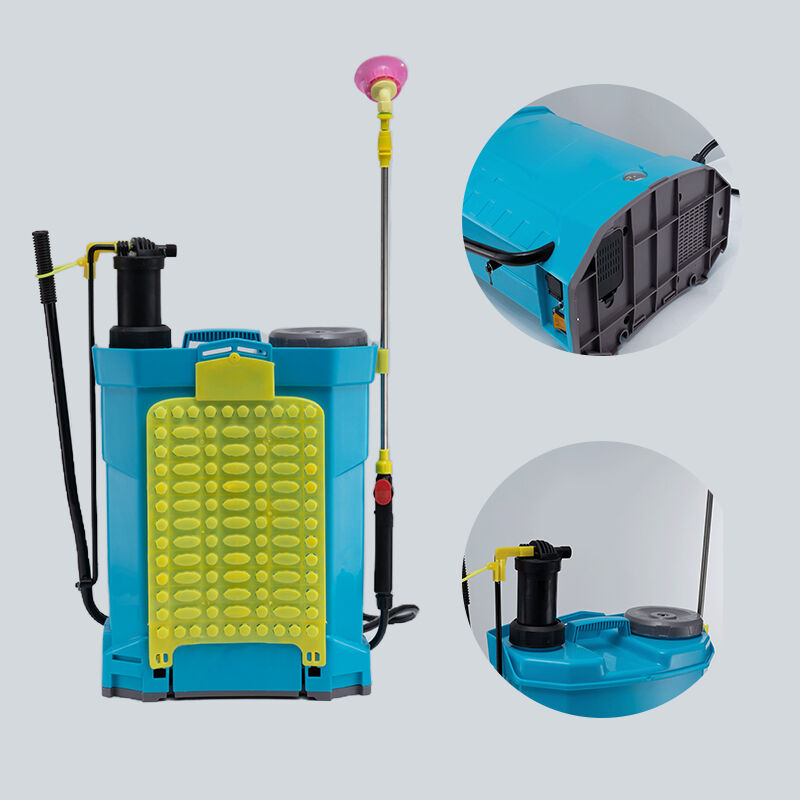
Sprayer Calibration: Ensuring Accurate Chemical Application Rates
Why Precise Calibration Prevents Under- or Over-Application
Getting sprayers properly calibrated isn't just important—it's absolutely essential for good pest control work. When farmers apply too little pesticide, pests can run rampant and damage crops. But applying too much just wastes money on extra chemicals and pollutes the environment unnecessarily. Studies show that incorrect application rates cost growers around $740,000 every year in losses they could have avoided according to Ponemon Institute research from 2023. Calibration takes into account all sorts of things that change over time including worn nozzles, varying pressure levels, and how fast equipment moves across different types of ground. Without regular checks, even the newest sprayers end up missing spots entirely or drenching certain areas too heavily. This matters because precise spraying keeps farmers within legal limits set by product labels and makes sure their investment pays off by matching exactly what plants need instead of guessing at application rates.
Step-by-Step Field Calibration for Boom Sprayers
Starting field calibration usually means checking how fast things move around. Measure how long it takes to cover 100 meters at normal operating RPMs to figure out kilometers per hour. After that step comes making sure all nozzles are putting out similar amounts. Collect samples from each tip for about a minute and replace anything that differs more than 5 percent from what the manufacturer says it should be. Adjust the system pressure to match what works best for the nozzles, generally somewhere between 20 and 45 psi when dealing with herbicides. Then check how much liquid flows through the entire boom section. To determine total application volume, use this calculation: take nozzle output in liters per minute, multiply by 600, divide that number by both speed in kilometers per hour and nozzle spacing in centimeters to get liters per hectare. Don't forget to run these tests again whenever there's been a nozzle change or approximately every 50 hours of operation.
Nozzle Selection and Droplet Management for Targeted Pest Control
Matching Nozzle Type to Pest, Canopy Density, and Growth Stage
Getting the right nozzle means matching how sprays work with what needs protection in the field. When dealing with thick plant cover like soybeans at their R3 growth phase, air induction nozzles do better because they create bigger droplets around 300 to 400 microns that don't evaporate so quickly. On the flip side, those tiny droplets between 100 and 200 microns coming out of flat fan nozzles spread wider and stick better for knocking down aphids on wheat fields where plants aren't packed together. But watch out - these small droplets can drift away easily, especially when wind speeds go above 6 miles per hour, which happens quite often actually. Farmers need to adjust based on crop development too. Young plants growing vigorously respond well to nozzles that limit drift since chemicals might harm them otherwise. Flowering crops require careful application though, as pollinators like bees need protection from getting sprayed accidentally.
Optimizing Droplet Spectrum to Balance Coverage, Penetration, and Drift Risk
Droplet size directly governs pesticide efficacy and environmental safety. Research shows medium droplets (200"–300 microns) achieve the optimal compromise"—delivering 30% better canopy penetration than ultra-coarse droplets while reducing drift by 70% compared to fine sprays. Consider these variables:
| Factor | Fine Droplets (100"–200µ) | Coarse Droplets (300"–400µ) |
|---|---|---|
| Coverage | Superior for insects | Moderate |
| Drift Potential | High | Low |
| Best Use Case | Contact insecticides | Soil-applied herbicides |
Systemic herbicides perform best with coarser spectra to minimize off-target movement, whereas fungicides require medium droplets for uniform leaf deposition. Always pair droplet optimization with sprayer calibration"—pressure fluctuations exceeding 10 PSI alter droplet size distribution by 25%, undermining targeting precision.
Drift Mitigation: Integrating Sprayer Setup, Weather Intelligence, and Best Practices
Operational Adjustments That Reduce Off-Target Movement by >40%
Making specific changes to how operations are run can really cut down on pesticide drifting problems. Studies show when boom heights are kept between 18 and 24 inches above plants, there's about a 40% drop in chemicals going where they shouldn't be compared to when booms are positioned higher up. Combine that adjustment with slower movement speeds under 10 miles per hour in areas that need extra protection, and droplets won't travel as far away from their intended spot. Checking weather conditions before spraying matters a lot too. Don't spray when temperatures invert or winds pick up past 10 mph since these situations triple the chances of drift happening. Setting aside buffer spaces measuring anywhere from 25 to 50 feet along streams and other non-target regions helps keep chemicals contained better. All these tweaks help achieve good coverage without harming surrounding environments, and still let equipment work efficiently as needed.
Smart Sprayer Technology: AI-Driven Precision for Reduced Inputs and Higher ROI
Real-Time Pest Detection and On-the-Go Spot-Spraying Systems
Smart sprayers equipped with AI technology actually see what's going on in the field thanks to computer vision and multispectral imaging that spot individual weeds and pests among crops. When these machines scan through fields, they analyze all sorts of data right there on site. Instead of just blasting chemicals everywhere, they spray herbicides only exactly where problems exist. This approach cuts down on unnecessary spraying across entire fields, minimizes unwanted chemical spread, and keeps healthy plants from getting damaged by mistake. What makes these autonomous systems really effective is their ability to tweak nozzle settings almost instantly depending on how thick the plant cover is and how bad the pest situation looks. Farmers have found them surprisingly reliable even when working on tricky ground conditions such as hillsides prone to sliding or muddy patches after heavy rains.
Field-Proven Reductions in Pesticide Use (30"–70%) via Variable Rate Application
VRT adjusts how much chemicals get applied based on where pests actually are, cutting down on what farmers need to buy by somewhere between 30% and 70% compared to old school approaches. The system works because sensors check out plants' health stuff like chlorophyll content and how much biomass there is, then figures out exactly how much spray should go where. What this means is no wasting chemicals on areas that don't need them. Money saved here ranges from about $18 to $42 for every acre farmed, plus it helps keep things within legal limits regarding chemical residues. For folks working the land, this kind of tech leads to better returns on investment since they're not throwing good money after bad, and at the same time keeps harmful stuff from washing into waterways and such.
Frequently Asked Questions
Why is sprayer calibration necessary?
Sprayer calibration ensures that chemicals are applied accurately, preventing under-application, which allows pests to damage crops, or over-application, which wastes resources and harms the environment.
How often should sprayers be calibrated?
Sprayers should be calibrated whenever there are nozzle changes or approximately every 50 hours of operation to ensure optimal performance.
What is Variable Rate Application (VRT) in sprayers?
VRT in sprayers adjusts the amount of chemicals applied based on real-time pest detection, reducing pesticide use by 30–70% compared to traditional methods.
Table of Contents
- Sprayer Calibration: Ensuring Accurate Chemical Application Rates
- Nozzle Selection and Droplet Management for Targeted Pest Control
- Drift Mitigation: Integrating Sprayer Setup, Weather Intelligence, and Best Practices
-
Smart Sprayer Technology: AI-Driven Precision for Reduced Inputs and Higher ROI
- Real-Time Pest Detection and On-the-Go Spot-Spraying Systems
- Field-Proven Reductions in Pesticide Use (30"–70%) via Variable Rate Application
- Frequently Asked Questions
- Why is sprayer calibration necessary?
- How often should sprayers be calibrated?
- What is Variable Rate Application (VRT) in sprayers?