
 EN
EN
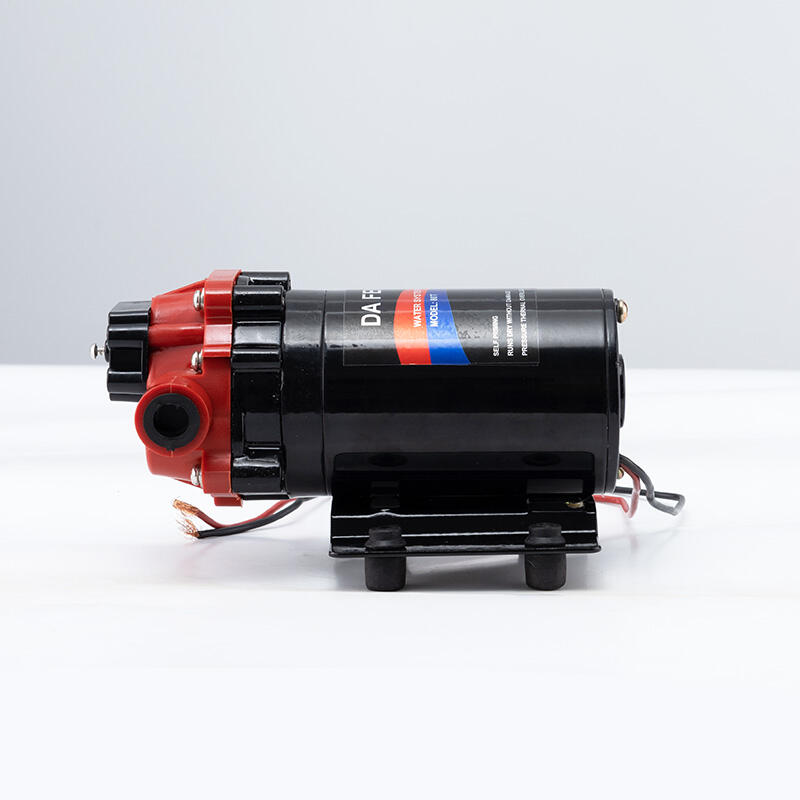
Assess Cleaning Requirements to Determine High-Pressure Pump Specifications
Water pressure and flow needs for effective surface sanitation and irrigation line cleaning
Cleaning greenhouse surfaces—concrete floors, glass panels, and production benches—requires sufficient pressure to break down tenacious biofilm, algae, and mineral deposits, while flow rate determines operational speed and coverage. Surface sanitation typically demands 2,000–3,000 psi at 2.5–4.0 gpm, balancing cleaning efficacy with water efficiency. In contrast, irrigation line flushing is a lower-pressure, higher-volume task: though a single drip line may need only 1–2 gpm, a zone with dozens of parallel lines can require over 10 gpm total. To evaluate suitability holistically, combine pressure and flow into cleaning units (CU = psi × gpm). A pump must deliver the required psi and gpm simultaneously—not just peak nameplate values—because high pressure without adequate flow moves contaminants too slowly, while ample flow at low pressure fails to dislodge stubborn residues.
Calculating total dynamic head: elevation, pipe friction, and nozzle demands in greenhouse layouts
Total dynamic head (TDH) represents the total energy a pump must supply to overcome elevation gain, pipe friction, and nozzle pressure requirements. Even modest vertical lifts matter: a 10-foot rise from supply tank to overhead spray lines adds ~4.3 psi of static head. Friction losses are often dominant—a 200-foot run of ¾-inch hose can consume 50–80 psi at cleaning flows, depending on hose quality and number of fittings. Crucially, the spray nozzle itself requires a minimum operating pressure—typically 40–100 psi—to generate a coherent, high-impact jet. So if the nozzle demands 2,000 psi at the gun, the pump’s discharge pressure must be 2,000 psi plus all TDH losses, often totaling 2,100–2,200 psi. Underestimating TDH results in weak, ineffective spray at the point of use—slowing cleaning and compromising sanitation outcomes.
Choose the Right High-Pressure Pump Type for Greenhouse Duty Cycles
Centrifugal (including multistage turbine) vs. positive displacement pumps for intermittent high-pressure cleaning
Greenhouse cleaning follows an intermittent duty cycle: short, high-intensity bursts rather than continuous operation. For this pattern, positive displacement (PD) pumps—especially triplex plunger models—are generally superior. They deliver near-constant flow regardless of pressure fluctuations, ensuring consistent, high-impact jets ideal for removing biofilm and algae. Standard centrifugal pumps, by contrast, suffer significant flow drop as system pressure rises—making them poorly suited for variable, high-pressure demands. While multistage centrifugal turbines can reach high pressures, they operate most efficiently under steady-state conditions. In start-stop cleaning workflows, the instantaneous pressure response and stable output of a plunger pump eliminate the need for complex recirculation or pressure-sustaining controls.
Energy efficiency, noise, and maintenance trade-offs across pump technologies
Selecting a high-pressure pump involves balancing long-term reliability against operational cost. Triplex plunger pumps run at lower speeds, reducing mechanical stress, noise, and seal wear—resulting in strong energy efficiency per unit of hydraulic work delivered. However, their higher initial cost and more frequent servicing of valves and seals increase lifetime maintenance expense. Multistage centrifugal pumps offer quieter, vibration-free operation—ideal for thermally stable greenhouse environments—and lower upfront maintenance. Yet they tend to be less energy-efficient under high-pressure, partial-load conditions, often dissipating excess energy as heat. For greenhouse operators, the plunger pump’s rapid startup and reliable pressure delivery must be weighed against its higher service complexity, while the centrifugal alternative offers simplicity and quiet operation at the potential cost of reduced efficiency during typical cleaning cycles.
Account for Water Source Quality and Infrastructure Compatibility
How recirculated nutrient solution, rainwater, or municipal water affects high-pressure pump selection and filtration requirements
The water source dictates critical material choices and filtration strategy for high-pressure pumps. Recirculated nutrient solutions, though sustainable, contain residual fertilizers and organic compounds that accelerate corrosion and fouling. A leading manufacturer’s failure analysis revealed that upgrading to pumps with 316 stainless steel or chemically resistant thermoplastic housings extended service life by 40%, underscoring the importance of matching materials to fluid chemistry—including pH and total dissolved solids (TDS)—to prevent premature failure.
Rainwater harvesting, often assumed to be benign, introduces acidity and abrasive sediment like roof-derived silica. This grit rapidly wears seals and impellers—especially in high-pressure PD pumps. Effective protection requires a multi-stage intake filtration system, progressing from coarse screening to fine cartridge filtration, to preserve pump integrity. The added filtration cost is routinely offset by significantly reduced maintenance frequency and downtime.
Municipal water offers predictable chemistry but poses risks from pressure variability and hardness. Inconsistent inlet pressure can cause cavitation if net positive suction head (NPSH) requirements aren’t met—necessitating a booster pump to stabilize suction conditions. The table below summarizes key selection criteria by source:
| Water Source | Primary Risk | Critical Pump Feature | Essential Filtration |
|---|---|---|---|
| Recirculated Nutrient Solution | Chemical corrosion & fouling | Chemically resistant materials (e.g., 316 stainless steel) | Chemical-resistant strainer, 100–200 mesh |
| Harvested Rainwater | Abrasive sediment & acidity | Hardened seals and wear-resistant impellers | Multi-stage: Hydrocyclone + 50-micron disc filter |
| Municipal Water | Fluctuating inlet pressure & hardness | Low NPSH requirement or integrated booster pump | 100-micron screen filter for scale prevention |
Infrastructure compatibility extends beyond water quality to the existing plumbing network. Retrofitting a high-pressure pump into an older greenhouse system with PVC piping risks catastrophic failure: pressure spikes can exceed the pipe’s pressure rating. Therefore, TDH calculations must account not only for nozzle demands but also for the weakest component in the system—ensuring safe, reliable integration with legacy infrastructure.
FAQ
What does psi and gpm signify in pump specifications?
Pounds per square inch (psi) indicates the pressure, while gallons per minute (gpm) measures the flow rate. Together, they determine cleaning efficiency and operational coverage.
Why is total dynamic head (TDH) important for pump setup?
TDH accounts for elevation gain, friction losses, and nozzle pressure requirements. Accurate calculation ensures effective cleaning and prevents weak sprays.
Which pump type suits intermittent greenhouse cleaning cycles best?
Positive displacement pumps, particularly triplex plunger models, are ideal due to their consistent flow and pressure even in fluctuating conditions.
How does water source quality affect pump selection?
Different water sources dictate materials and filtration to prevent corrosion, fouling, cavitation, or sediment damage.
What risk does older infrastructure pose when integrating high-pressure pumps?
Legacy systems may include weaker components that can fail under high pressure. TDH factors must accommodate these risks for safe use.
Table of Contents
- Assess Cleaning Requirements to Determine High-Pressure Pump Specifications
- Choose the Right High-Pressure Pump Type for Greenhouse Duty Cycles
- Account for Water Source Quality and Infrastructure Compatibility
-
FAQ
- What does psi and gpm signify in pump specifications?
- Why is total dynamic head (TDH) important for pump setup?
- Which pump type suits intermittent greenhouse cleaning cycles best?
- How does water source quality affect pump selection?
- What risk does older infrastructure pose when integrating high-pressure pumps?