
 EN
EN
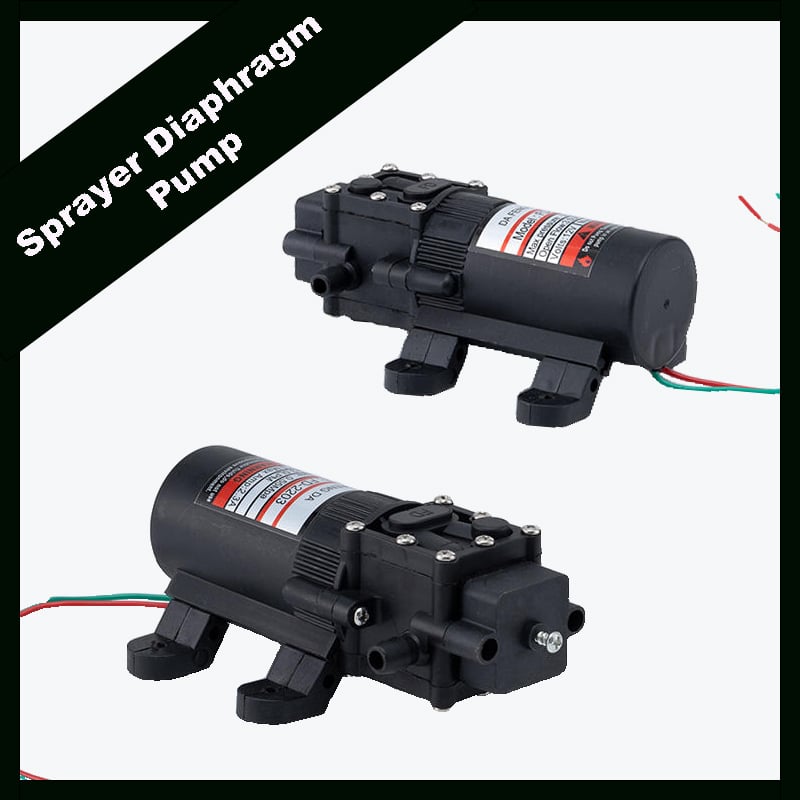
Understanding Greenhouse Irrigation Pressure Requirements
A reliable greenhouse irrigation system depends on stable water pressure and consistent flow delivery. Whether the system uses drip irrigation, micro-sprinklers, or fertigation equipment, the pump must provide sufficient pressure at the farthest irrigation point—not only at the pump outlet.
For this reason, selecting a diaphragm pump based only on static pressure can lead to poor performance. Factors such as pipe friction, elevation changes, filters, valves, and emitter requirements all influence the actual pump demand.
Why Total Dynamic Head (TDH) Matters for Pump Selection
Total Dynamic Head (TDH) represents the total resistance a pump needs to overcome during operation. It combines:
- Static lift: The vertical distance between the water source and the highest irrigation point.
- Pressure requirement: The operating pressure required by drip emitters or sprinklers.
- Friction loss: Pressure losses caused by pipes, fittings, filters, and valves.
For water systems, pressure can be converted into head using the relationship:
1 psi ≈ 2.31 feet of water head
For example, an irrigation system operating at 30 psi requires approximately 69 feet of pressure head before considering pipe friction and elevation changes.
By evaluating TDH instead of static pressure alone, growers and system designers can select a diaphragm pump that delivers reliable performance throughout the greenhouse.
Maintaining Pressure Stability in Drip Irrigation Systems
Greenhouse crops require consistent water and nutrient distribution. Pressure fluctuations can cause uneven flow between different irrigation zones, affecting plant growth and fertilizer application accuracy.
A properly selected diaphragm pump helps maintain stable pressure because of its positive displacement pumping principle. Compared with many traditional centrifugal pumps, diaphragm pumps can provide consistent flow characteristics, especially in systems requiring moderate flow rates and steady pressure.
To improve irrigation uniformity, the pump should be combined with:
- Correctly sized irrigation pipes
- Pressure regulators
- Proper filtration systems
- Suitable emitter selection
A complete hydraulic design is essential because pump performance depends on the entire irrigation system, not only the pump itself.
How to Choose the Right Diaphragm Pump for Greenhouse Applications
Match Pump Flow and Pressure with System Demand
When selecting a greenhouse irrigation diaphragm pump, buyers should review the pump performance curve and compare it with actual operating requirements.
Important factors include:
- Required flow rate
- Operating pressure
- Total Dynamic Head (TDH)
- Irrigation zone size
- Operating hours and duty cycle
A pump operating too close to its maximum capacity may experience increased wear and unstable performance. Selecting a suitable operating range helps improve efficiency and service life.
Consider Duty Cycle and Operating Conditions
Greenhouse irrigation systems may operate frequently throughout the growing season. Therefore, pump durability depends on whether the model is suitable for the expected working cycle.
Consider:
- Continuous or intermittent operation
- Water temperature
- Installation environment
- Maintenance accessibility
Choosing a pump designed for the actual application conditions helps reduce downtime and improves long-term reliability.
Advantages of Diaphragm Pumps in Greenhouse Fertigation Systems
Self-Priming Capability and Reliable Operation
Many diaphragm pumps offer self-priming capability, making them suitable for applications where the pump needs to draw water from tanks or reservoirs.
This feature can simplify installation and help reduce interruptions caused by air entering the suction line.
Some diaphragm pump designs also tolerate short periods of dry operation better than traditional pump types, depending on the construction and materials used.
Chemical Compatibility for Fertilizer Applications
Fertigation systems often involve liquid fertilizers, nutrients, and chemical additives. Pump material selection is therefore important.
Diaphragm pumps with chemically resistant materials such as EPDM, Santoprene, or PTFE components may provide better compatibility with different agricultural solutions.
Before selecting a pump, users should confirm:
- Chemical concentration
- Fluid temperature
- Compatibility of diaphragm and seal materials
Proper material selection helps improve pump durability and reduce maintenance requirements.
Improving Greenhouse Irrigation Efficiency with the Right Pump Solution
A diaphragm pump is an important component in greenhouse irrigation systems, but overall performance depends on proper system design.
The best results usually come from combining:
- Accurate TDH calculation
- Suitable pump sizing
- Stable pressure control
- Proper filtration
- Correct irrigation zoning
For greenhouse growers and irrigation professionals, selecting the right diaphragm pump helps create a more reliable water delivery system, improves fertilizer distribution, and supports consistent crop management.
FAQ
What is TDH in greenhouse irrigation pump selection?
TDH (Total Dynamic Head) represents the total resistance a pump must overcome, including elevation changes, pressure requirements, and friction losses in the irrigation system.
Why are diaphragm pumps suitable for greenhouse irrigation?
Diaphragm pumps can provide stable flow and pressure performance, making them suitable for drip irrigation, micro-sprinkler systems, and fertigation applications.
Can diaphragm pumps be used with fertilizers?
Yes. Many diaphragm pumps are designed for agricultural chemical applications, but users should select diaphragm and seal materials compatible with the specific fertilizer solution.
How do I choose the correct diaphragm pump size?
Pump selection should consider flow rate, pressure requirement, TDH, duty cycle, and the overall irrigation system design rather than relying only on water source pressure.
How can I improve irrigation pressure uniformity?
Using a properly sized pump together with pressure regulators, filtration systems, and correctly designed irrigation zones can help maintain more consistent water distribution.
Table of Contents
- Understanding Greenhouse Irrigation Pressure Requirements
- Maintaining Pressure Stability in Drip Irrigation Systems
- How to Choose the Right Diaphragm Pump for Greenhouse Applications
- Advantages of Diaphragm Pumps in Greenhouse Fertigation Systems
- Improving Greenhouse Irrigation Efficiency with the Right Pump Solution