
 EN
EN
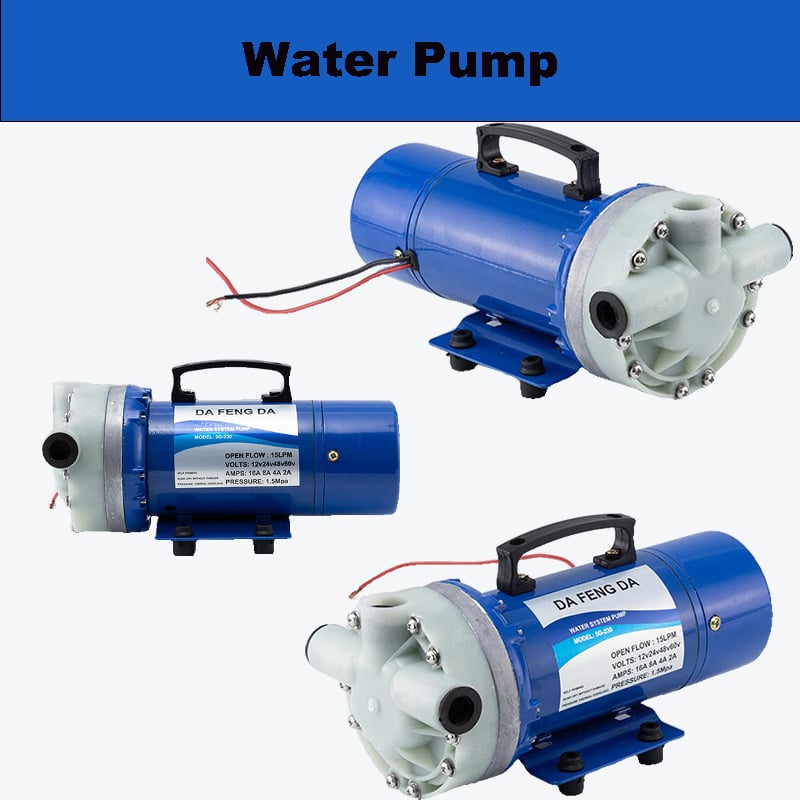
Choosing the right water pump for garden and greenhouse irrigation requires more than checking pump horsepower or outlet pressure. A reliable irrigation system depends on matching the pump’s flow rate, pressure capability, water source conditions, and operating environment.
For greenhouse growers and agricultural users, an incorrectly selected pump may cause uneven watering, unstable pressure, excessive energy consumption, or shortened equipment life. Understanding key factors such as flow rate, Total Dynamic Head (TDH), pump type, and maintenance requirements helps ensure consistent irrigation performance.
Understanding Flow Rate and Total Dynamic Head (TDH) for Irrigation Pump Selection
Flow rate and Total Dynamic Head (TDH) are two of the most important factors when selecting a water pump.
Flow rate refers to the amount of water a pump can deliver over a specific period, usually measured in gallons per minute (GPM) or liters per minute (L/min). It determines whether the pump can supply enough water for drip lines, sprinklers, or greenhouse misting systems.
TDH represents the total resistance the pump must overcome during operation. Unlike static pressure, TDH considers the complete irrigation system, including:
- Vertical lifting distance between the water source and outlet
- Friction losses caused by pipes, fittings, and valves
- Pressure requirements of irrigation equipment
A common relationship used in irrigation design is:
1 PSI ≈ 2.31 feet of water head
This allows pressure requirements and elevation changes to be converted into a common measurement.
For example, a greenhouse located above a water source may require additional pump capacity because the pump must overcome both elevation differences and pipeline resistance. Selecting a pump based only on water source height may result in insufficient pressure at the far end of the irrigation system.
The best approach is to select a pump according to its performance curve and ensure the operating point matches the required flow rate and TDH.
Choosing the Right Water Pump Type for Garden and Greenhouse Applications
Different irrigation systems require different pump designs.
Centrifugal Pumps for Surface Water Sources
Centrifugal pumps are commonly used for ponds, storage tanks, and other surface water supplies. They are suitable for applications where the water source is easily accessible and moderate flow rates are required.
Their advantages include:
- Simple structure
- Easy maintenance
- Suitable for continuous irrigation applications
However, they usually require proper priming and are limited by suction conditions.
Submersible Pumps for Wells and Underground Water Sources
Submersible pumps operate while fully immersed in water. They are commonly selected for wells, underground reservoirs, and applications where suction limitations make surface pumps unsuitable.
Advantages include:
- Quiet operation
- Reduced priming requirements
- Effective water lifting capability
The correct choice depends mainly on water source depth, required pressure, and irrigation demand.
Specialized Pumps for Drip and Greenhouse Irrigation
Greenhouse irrigation often requires stable and controlled water delivery rather than simply high flow output.
Depending on the system design, growers may choose:
- Low-pressure pumps for drip irrigation
- Diaphragm pumps for precise fluid handling
- Compact pumps for rain barrel or small garden applications
The ideal pump should match the emitter requirements while avoiding unnecessary energy consumption.
How to Size a Water Pump for Drip Irrigation and Greenhouse Systems
Proper pump sizing is essential for maintaining uniform plant watering.
The basic selection process includes:
1. Calculate Required Flow Rate
Determine the total water demand of all active irrigation devices.
For example:
- Number of drip emitters
- Sprinkler flow requirements
- Misting nozzle consumption
The pump should provide enough flow to operate the irrigation zones without pressure drop.
2. Calculate Total Dynamic Head
TDH should include:
- Elevation difference
- Pipe friction loss
- Required operating pressure
A pump that does not meet the required TDH may provide insufficient water at distant outlets.
3. Consider Operating Conditions
Greenhouse systems often operate in zones, meaning water demand changes as valves open and close.
A suitable pump should maintain stable pressure under changing conditions. Selecting a pump with appropriate capacity and a reasonable safety margin can improve reliability and accommodate future system changes.
Improving Irrigation Pump Reliability Through Filtration and Maintenance
Long-term pump performance depends heavily on water quality and regular maintenance.
Water sources such as ponds, wells, and rainwater storage systems may contain:
- Sand particles
- Organic debris
- Sediment
- Mineral deposits
Without proper filtration, these contaminants can wear pump components, reduce efficiency, and block irrigation emitters.
Recommended maintenance practices include:
- Cleaning filters regularly
- Checking pump seals and connections
- Inspecting pipes and valves for leaks
- Removing accumulated sediment
- Monitoring pressure and flow changes
Water quality management is especially important in greenhouse environments because unstable irrigation can affect plant growth and fertilizer distribution.
FAQ
What factors should I consider when selecting a garden irrigation pump?
The main factors include required flow rate, Total Dynamic Head (TDH), water source type, irrigation method, and operating environment.
Why is TDH important for water pump selection?
TDH provides a more accurate understanding of the resistance a pump must overcome because it includes elevation, friction losses, and required pressure.
Are centrifugal pumps suitable for greenhouse irrigation?
Yes. Centrifugal pumps are commonly used for greenhouse irrigation when the water source is accessible and the system requires continuous water delivery.
When should I use a submersible pump?
Submersible pumps are suitable for deeper water sources such as wells or underground tanks where surface pumps may not provide sufficient suction performance.
How can I extend the service life of an irrigation pump?
Regular filtration, proper maintenance, and selecting a pump that matches the system requirements can help maintain reliable performance and reduce downtime.
Table of Contents
- Understanding Flow Rate and Total Dynamic Head (TDH) for Irrigation Pump Selection
- Choosing the Right Water Pump Type for Garden and Greenhouse Applications
- How to Size a Water Pump for Drip Irrigation and Greenhouse Systems
- Improving Irrigation Pump Reliability Through Filtration and Maintenance
- FAQ