
 EN
EN
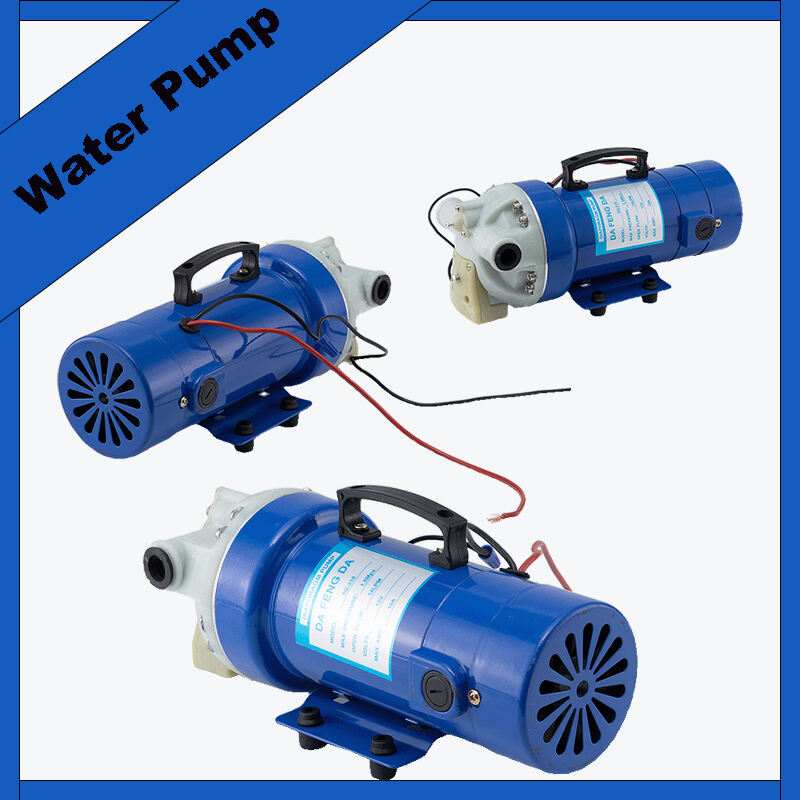
Matching Water Pump Types to Irrigation Scale and Environment
Residential Lawns vs. Agricultural Fields: Flow, Pressure, and Duty Cycle Differences
Residential lawn irrigation typically requires 5–20 GPM at 30–50 PSI, operating intermittently for 1–2 hours daily. Agricultural field systems demand 100–1,000+ GPM at 60–100 PSI with continuous 8–12 hour duty cycles. These differences reflect core functional needs: lawns require precise, shallow coverage for turfgrass, while fields need sustained pressure and volume to penetrate dense soils and support deep-rooted crops. Oversizing pumps in residential settings wastes 20–40% more energy (U.S. Department of Energy, 2023), whereas undersized agricultural units risk crop stress during peak demand. Crucially, duty cycle mismatch is a leading cause of premature failure—residential-grade pumps installed in farm applications often fail within months due to thermal overload and mechanical fatigue.
Soil, Slope, and Climate Impact on Water Pump Sizing and System Efficiency
Soil type, topography, and climate directly shape pump selection and system efficiency. Sandy soils drain rapidly, requiring ~30% higher flow rates than clay to maintain adequate moisture; steep slopes (≥5° incline) add 10–15 PSI per vertical foot of lift; and arid climates necessitate ~20% greater capacity to offset evaporation losses versus temperate zones. These variables feed directly into Total Dynamic Head (TDH) calculations—failure to account for them results in measurable performance deficits:
| Factor | Impact on Pump Requirements | Efficiency Loss if Ignored |
|---|---|---|
| Sandy Soil | +30% flow rate | 15–20% water wastage |
| Steep Slopes | +1.5 PSI per vertical foot | 12–18% pressure deficit |
| Arid Climate | +20% duty cycle | 25% evaporation loss |
High-salinity or silt-laden water further strains standard centrifugal pumps, cutting service life by up to 40% in coastal or alluvial regions. Integrating these environmental stressors into initial sizing ensures both hydraulic reliability and long-term energy efficiency.
Centrifugal, Submersible, and Turbine Water Pumps: Use Cases and Limitations
Centrifugal Water Pumps for Low-Head Surface Sources (Lakes, Canals, Reservoirs)
Centrifugal pumps are the go-to solution for low-head surface-water applications—lakes, canals, and reservoirs—where water is readily accessible and static lift remains ≤25 feet. Their impeller-based design delivers efficient, high-volume flow (up to 15,000 GPM) and handles moderate sediment better than alternatives. They’re cost-effective to install and well-suited for flood irrigation or large-area sprinkler systems on flat terrain. However, they rely on consistent water levels and require priming before startup—making them unsuitable for dry-start conditions or deep-well extraction. Efficiency drops sharply under high-pressure or variable-depth demands.
Submersible and Turbine Water Pumps for High-Head, Deep-Well Field Applications
For deep-well irrigation exceeding 100 feet, submersible and turbine pumps deliver unmatched pressure stability and depth tolerance. Submersibles operate fully immersed, using sealed motors and multi-stage impellers to push water vertically—eliminating cavitation risks inherent in suction-lift designs. Turbine pumps (vertical or horizontal) achieve similar high-pressure output through stacked impellers, making them ideal for center-pivot systems and sloped-field applications. Both types accommodate fluctuating water tables but demand precise sizing: undersized units overheat during extended operation, while oversized ones sacrifice efficiency and accelerate wear. Retrieval for maintenance requires specialized equipment, increasing downtime complexity. Solar-powered variants now provide robust off-grid alternatives, reducing lifetime operational costs without compromising performance.
Key Technical Parameters: Total Dynamic Head, Flow Rate, and Water Source Compatibility
Calculating Total Dynamic Head (TDH) for Drip, Sprinkler, and Flood Systems
Total Dynamic Head (TDH) represents the total pressure a pump must generate to move water through an irrigation system. It equals Static Head (elevation difference between source and highest emitter) + Friction Losses (resistance across pipes, fittings, and valves) + Pressure Head (minimum required at emitters). TDH varies significantly by system type:
- Drip systems prioritize friction loss management in small-diameter tubing; emitter pressure requirements (10–25 PSI) contribute little to TDH but demand tight control over flow velocity and pipe sizing.
- Sprinkler systems require higher pressure heads (30–60 PSI) for nozzle atomization, making mainline friction losses especially critical.
- Flood systems, by contrast, emphasize static head and open-channel flow resistance, with minimal pressure head requirements.
Underestimating TDH leads to insufficient flow and uneven coverage; overestimation wastes energy and accelerates wear. Always apply a 10–20% safety margin to accommodate pipe aging, seasonal flow variations, and minor design uncertainties.
Power Options for Reliable Water Pump Operation: Electric, Diesel, and Solar
Solar-Powered Water Pumps: Viability, ROI, and Design Considerations for Off-Grid Fields
Solar-powered water pumps offer a resilient, emissions-free solution for remote or grid-constrained agricultural operations. Their viability hinges on local solar insolation—regions averaging ≥5 peak sun hours daily deliver optimal performance, particularly during dry-season demand spikes. Though upfront investment runs 30–50% higher than conventional options, lifecycle savings are substantial: diesel-powered alternatives incur approximately $740,000 in lifetime operational costs (Ponemon Institute, 2023), while well-designed solar systems typically recoup capital in 3–7 years. Critical design considerations include:
- Photovoltaic array sizing, aligned to daily water volume targets and site-specific irradiance data;
- Hybrid backup integration, such as battery storage or automatic transfer switches, to ensure continuity during extended cloud cover;
- Head-flow optimization, selecting pumps engineered for high efficiency at low RPMs to maximize solar energy capture across variable sunlight conditions.
When configured with technical rigor, solar water pumping reduces carbon footprint, eliminates fuel logistics, and delivers dependable, scalable irrigation—especially valuable for environmentally focused and off-grid farming operations.
FAQ
What type of water pump is best for residential lawns?
For residential lawns, pumps that provide 5–20 GPM at 30–50 PSI are typically sufficient. This meets the intermittent operational needs of most residential irrigation systems.
How do soil and climate impact water pump efficiency?
Sandy soils require higher flow rates, while steep slopes and arid climates necessitate additional pressure and capacity to maintain efficiency. Ignoring these factors can lead to water wastage and pressure deficits.
Are solar-powered water pumps a viable option for agricultural use?
Yes, solar-powered pumps are feasible for off-grid agriculture, particularly in regions with high solar insolation. They offer an environmentally friendly, cost-effective alternative to diesel pumps.
Table of Contents
- Matching Water Pump Types to Irrigation Scale and Environment
- Centrifugal, Submersible, and Turbine Water Pumps: Use Cases and Limitations
- Key Technical Parameters: Total Dynamic Head, Flow Rate, and Water Source Compatibility
- Power Options for Reliable Water Pump Operation: Electric, Diesel, and Solar
- FAQ