
 EN
EN
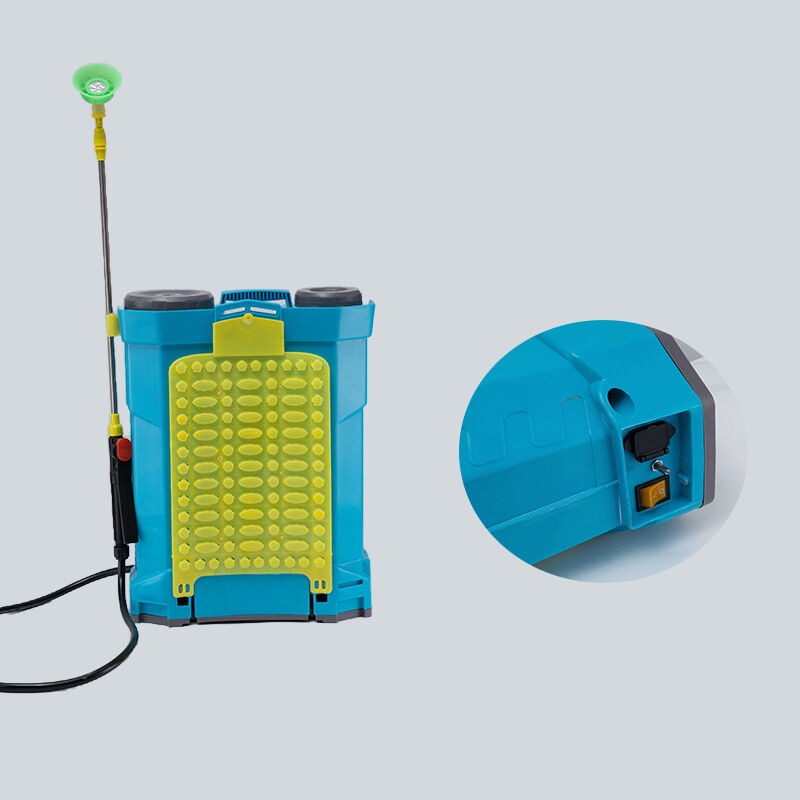
Why Cordless Electric Sprayers Are Ideal for Targeted Garden Weed Control
Precision application minimizes herbicide waste and protects desirable plants
A cordless electric sprayer delivers consistent, controlled output—enabling accurate targeting of individual weeds without overspray. By adjusting the nozzle to a narrow stream or fine mist, you apply herbicide only where needed, safeguarding flowers, vegetables, and lawn grass. This precision reduces chemical waste by up to 30% compared to broadcast spraying, lowering both cost and environmental impact. The electric pump maintains steady pressure throughout use, ensuring every drop is delivered effectively and minimizing soil saturation around treated weeds.
Ergonomic design reduces fatigue versus manual pump sprayers
Unlike manual pump sprayers—which require repeated lever actuation to build and sustain pressure—cordless electric models eliminate hand, arm, and shoulder strain entirely. With constant battery-powered pressure, you simply switch on and move through your garden. Most weigh under 4 pounds when filled and feature balanced handles or padded straps that distribute weight evenly. This ergonomic advantage supports full-session coverage without muscle fatigue or missed spots.
Zero emissions and quiet operation enhance safety and environmental compatibility
Gas-powered sprayers emit exhaust fumes harmful to pollinators, nearby plants, and operator health. Cordless electric sprayers run silently on rechargeable lithium-ion batteries—producing zero emissions and operating at under 60 decibels (comparable to normal conversation). That quiet performance allows early-morning use or compliance with neighborhood noise restrictions. With no fuel vapors or leaks, the unit can be safely stored in garages or sheds without ventilation concerns—making it a clean, responsible choice for residential weed control.
Critical Performance Features of a High-Performance Electric Sprayer
Optimal tank capacity (1–4 L) for home garden coverage and maneuverability
For most home gardens, a tank capacity between 1 and 4 liters strikes the ideal balance: sufficient volume for typical beds or patches, yet light enough to remain highly maneuverable. A 1-liter model excels for container plants or tight spaces; a 4-liter unit covers larger vegetable plots without frequent refills. Tanks exceeding 4 liters often become unwieldy when full—impeding reach under dense foliage and increasing user fatigue. The compact 1–4 L range also fits easily in sheds or storage closets and supports one-handed carrying, reinforcing practicality across extended use.
Adjustable nozzle and consistent spray pattern control for selective weed treatment
Effective selective weed control hinges on precise delivery—and high-performance electric sprayers deliver it via adjustable nozzles capable of switching instantly between fine mist, medium cone, and concentrated stream patterns. This flexibility supports broad coverage for uniform areas or surgical targeting of isolated weeds. Crucially, the electric motor sustains uniform pressure from first trigger pull to last drop—eliminating the fading output common in manual pumps. Look for twist-lock nozzle heads offering at least three reliable settings and built with clog-resistant materials for season-long consistency.
IP54+ rating, chemical-resistant seals, and balanced ergonomic build
Durability and comfort are essential for tools used repeatedly across seasons. A minimum IP54 rating ensures protection against dust ingress and water splashes from any angle—critical for rinsing after use or incidental rain exposure. Equally important are chemical-resistant components: HDPE tanks and Viton or EPDM seals withstand repeated contact with herbicides, insecticides, and fertilizers without swelling, cracking, or leaking. Finally, thoughtful ergonomics—including a low center of gravity, contoured grip, and (for backpack models) a padded, load-distributing strap—reduce fatigue during longer applications. When these elements converge, the sprayer becomes a dependable, long-term partner for effective, repeatable weed management.
Battery Intelligence: Runtime, Recharge, and Long-Term Value of Electric Sprayers
Lithium-ion (Li-ion) batteries define modern cordless gardening tools—delivering superior energy density, stable voltage output, and minimal memory effect compared to older NiCd or NiMH cells. For electric sprayers, real-world usability depends less on peak specs and more on how well battery runtime and recharge behavior align with typical home garden tasks.
Matching lithium-ion battery specs (20–45 min runtime) to typical garden tasks
Standard Li-ion battery capacities for electric sprayers range from 1.8Ah to 4.0Ah, yielding 20–45 minutes of continuous spray time per charge under typical herbicide application conditions. Most residential weed treatments involve short, focused sessions—targeting discrete patches rather than nonstop coverage—so mid-range runtimes (25–35 minutes) often provide optimal balance between power and portability. Prioritizing maximum Ah capacity can compromise weight distribution and handling without meaningful gains for average gardeners.
Swappable batteries and warranty-backed cell longevity for sustainable ownership
Modular, swappable battery systems let you continue working while one pack recharges—preserving workflow momentum during large-scale treatments. Reputable manufacturers back their Li-ion cells with warranties covering 300–500 full charge cycles before capacity drops below 80%, representing multiple growing seasons of regular use. Always verify battery-specific warranty terms, as replacement costs significantly influence long-term value—especially since battery degradation is the most common cause of sprayer obsolescence.
Top-Rated Cordless Electric Sprayers for Home Gardeners in 2024
The best cordless electric sprayers for home use combine reliable pressure consistency, intuitive nozzle adjustability, and battery runtime aligned with real-world gardening demands. Leading options include compact 1–2 L handheld units for spot treatments and 4 L backpack-style models for broader coverage—both designed around the 1–4 L capacity sweet spot. The Milwaukee M18 4-Gallon Cordless Battery-Powered Backpack Sprayer exemplifies this standard, featuring responsive trigger control, chemical-resistant Viton seals, and an IP54-rated housing built for durability. When evaluating models, prioritize adjustable nozzles with dedicated cone (for targeted herbicide use) and shower (for gentle watering) settings. Also consider tank capacity, swappable battery compatibility, and manufacturer warranty depth—particularly battery and seal coverage—as these directly shape long-term reliability, efficiency, and total cost of ownership.
FAQ Section
What are the key advantages of cordless electric sprayers?
The main benefits include precise application to minimize herbicide waste, ergonomic design to reduce fatigue, zero emissions for environmental safety, and consistent output for effective weed control.
What tank capacity should I choose for my garden?
For home gardens, a tank capacity between 1–4 liters is ideal. Smaller tanks (1–2 L) suit tight spaces or spot treatments, while larger capacities (3–4 L) work well for covering bigger garden areas.
How long does a lithium-ion battery last on an electric sprayer?
Battery runtime typically ranges from 20–45 minutes depending on the capacity (e.g., 1.8Ah to 4.0Ah). Mid-range runtimes of 25–35 minutes are generally adequate for most residential weed control tasks.
Can I swap batteries during extended use?
Yes, swappable battery systems allow you to use a second charged battery for uninterrupted workflow, especially during larger gardening jobs.
What maintenance does an electric sprayer require?
Ensure regular cleaning of the nozzle, tank, and seals. Use components made with chemical-resistant materials such as HDPE tanks and Viton seals to prevent leaks or damage from repeated herbicide exposure.
Table of Contents
- Why Cordless Electric Sprayers Are Ideal for Targeted Garden Weed Control
- Critical Performance Features of a High-Performance Electric Sprayer
- Battery Intelligence: Runtime, Recharge, and Long-Term Value of Electric Sprayers
- Top-Rated Cordless Electric Sprayers for Home Gardeners in 2024
- FAQ Section